- "The calf" is two muscles: the gastrocnemius crosses the knee and the ankle, the soleus crosses the ankle only, and both pull on the heel through the Achilles tendon [1]. A short calf changes how the ankle, the heel and the knee behave.
- The movement tight calves steal is ankle dorsiflexion, the shin tipping forward over the foot. People who could not dorsiflex past neutral were about 23 times more likely to have plantar fasciitis than people with more than 10 degrees of range [2]; blocked dorsiflexion also makes knees collapse inwards in squats [3] and predicts patellar tendinopathy in jumpers [4].
- You can measure your own range with a wall and a tape measure: healthy young adults reach about 9.5 cm (3.7 in) from big toe to wall with the knee touching and the heel down [5], and a change of 2 cm is real, not noise [6].
- Calf stretching works, modestly: pooled trials show a gain of 2 to 3 degrees [7]; older women gained over 12 degrees in six weeks [8]. Guideline holds are 10 to 30 seconds, about 60 seconds per muscle in total, at least two to three days a week [9][10].
- For plantar fasciitis, stretching the fascia itself beat a standard calf stretch [11], and heel-raise strength training beat stretching at three months [12]. For Achilles tendon pain, loading beats stretching, and deep stretches can make pain at the heel attachment worse [13][14].
The two calf muscles, and why the difference matters
What you feel as one hard lump at the back of your lower leg is two muscles stacked on top of each other. The outer one is the gastrocnemius, the muscle that gives the calf its shape. Its two heads start on the femur, just above the back of the knee, and it runs down to join the Achilles tendon, which attaches to the calcaneus, the heel bone [1]. Because it starts above the knee, the gastrocnemius does two jobs: it points the foot down (plantarflexion) and it helps bend the knee [1].
Underneath it lies the soleus, a flat, wide muscle that starts on the tibia and fibula, below the knee, and joins the same Achilles tendon [1]. It only crosses the ankle, so it only points the foot, whatever the knee is doing, which makes it the workhorse for standing and walking.
Why does this matter for a stretch? Because a muscle can only be stretched across the joints it crosses. With your knee straight, pulling the foot up stretches both muscles, and the gastrocnemius is usually what you feel. With the knee bent, the gastrocnemius goes slack and the same ankle movement stretches the soleus on its own. That is why every good calf routine has a straight-knee and a bent-knee version. And because both muscles end in the same tendon, the Achilles takes the pull every time the calf shortens [1]. Tight calves are never only a calf problem: the tension goes down into the heel, and the lost ankle movement gets made up for above, at the knee.
Why calves get tight
Walking, running and standing all day
Every step ends with the calf pushing the body forward, and a long walk or run is thousands of those contractions. Muscles that are loaded hard and often, and never taken through their full length, get strong and short, which is why "tight calves after running" is such a common search. Standing is its own load: in a case-control study of 50 people with plantar fasciitis, those who spent most of the workday on their feet had 3.6 times the odds of the condition [2].
Heels, chairs and years
Any shoe with a raised heel holds the ankle in a pointed position, the calf's shortest length; so does sitting with the feet tucked under the chair, and a muscle kept short for hours adapts to that length. Add age: limited dorsiflexion in older adults is associated with gait changes and a higher risk of falls [8]. The good news from the same research is that the loss is reversible. Healthy women aged 76 to 91 who stretched their calves five days a week for six weeks gained a mean of 12.3 degrees of ankle dorsiflexion [8].
"Tight calves not due to exercise": when it is not the muscle
Night cramps in the calf are common and usually harmless; the NHS lists ageing, strain during exercise, the later stages of pregnancy, dehydration and some medicines such as statins and diuretics among the causes [15]. A calf that is swollen, throbbing, and red, blue or darker than the other leg is not tightness: those are the NHS's warning signs of a deep vein thrombosis, which needs an urgent GP appointment or a call to 111, and a 999 call if there is also breathlessness or chest pain [16]. Calves that cramp reliably after the same walking distance and ease with rest should also be checked, because that pattern can come from the blood supply rather than the muscle. None of these are stretching problems.
What tight calves do to your heel, your knee and your squat
The thread running through this article is one ankle movement: dorsiflexion, the shin tipping forward over a flat foot. You use it every step, every stair, every squat and every time you stand up from a chair. Short calves limit it, and the body borrows the missing movement from the joints next door.
The heel: plantar fasciitis and the Achilles
Plantar fasciitis is irritation of the plantar fascia, the thick band under the foot that runs from the heel to the toes. It is the most common cause of heel pain, roughly one person in ten develops it at some point, and the giveaway symptom is pain on the first steps in the morning or after sitting, easing as you walk [17][18]. The link with the calf is one of the strongest in this field. In the case-control study above, people whose ankle would not dorsiflex past neutral (0 degrees, knee straight) had an odds ratio of 23.3 for plantar fasciitis compared with people who had more than 10 degrees, and the authors called reduced dorsiflexion the most important risk factor they measured, ahead of a body-mass index over 30 (odds ratio 5.6) and standing work (3.6) [2]. A systematic review of 16 studies found the firmest associations with body-mass index in non-athletes and with heel spurs, and "some evidence" linking reduced ankle dorsiflexion, prolonged standing and age [19]. The honest summary: in the general population, a stiff ankle is strongly linked with heel pain. In physically active people the picture is less clear; a 2021 meta-analysis found higher body mass and, perhaps surprisingly, more plantarflexion range as the risk factors that reached significance [20].
The Achilles tendon pays in a different currency. "Calf muscle tightness puts extra stress on the Achilles tendon," as the American Academy of Orthopaedic Surgeons puts it; a sudden increase in activity, a change of shoes and a bony bump at the back of the heel are the other usual causes, and morning pain and stiffness along the tendon is the typical first symptom [14]. What to do about it is not what most people assume, and it gets its own section below.
The knee: where the missing movement goes
When the ankle will not bend forward, the knee has two choices on the way down into a step or a squat: stop bending early, or collapse inwards. In a laboratory study, 30 healthy adults squatted normally and then on a 12-degree wedge that blocked ankle dorsiflexion to mimic tight calves. On the wedge they bent the knee less, the knee drifted into more valgus (inward collapse) with a very large increase in medial knee displacement, the quadriceps worked less and the soleus worked more; the authors noted that these are the same changes seen in people with patellofemoral pain [3].
The prospective evidence is strongest in jumpers. Ninety junior elite basketball players were followed for a year: the 16% who developed patellar tendinopathy (pain at the tendon below the kneecap) had started with about 5 degrees less ankle dorsiflexion, and players below a cut-off of 36.5 degrees had an 18.5 to 29.4% risk of developing it within the year against about 2% for players above it [4]. So "tight calves knee pain" is not a myth: a stiff ankle is a measurable risk for the tendon below the kneecap, and it produces the movement pattern that goes with pain behind it.
The squat
If your heels lift, your knees cave in or your torso tips forward at the bottom of a squat, test your ankles before you blame your hips. In 40 physically active adults, those with more range on the weight-bearing lunge test bent their knees and ankles more during overhead and single-leg squats, while a lying, passive ankle test did not separate the groups at all [21]. The loaded, knee-to-wall version is the one that predicts how you move, and it is the one you can do at home.
The dorsiflexion self-test: knee to wall
This is the weight-bearing lunge test physiotherapists use, and it is reliable even in the hands of a beginner [5][6]. You need a wall, a tape measure and bare feet.
- Stand facing a wall and place one foot flat on the floor with the big toe 10 cm (4 in) from the wall, second toe pointing straight at it [5].
- Keeping the heel on the floor, lunge forward until the kneecap touches the wall.
- If the knee touches easily, move the foot back 1 cm at a time and repeat; if the heel lifts, move it closer [5].
- Record the largest toe-to-wall distance at which the knee still touches with the heel down [5]. Test both sides.
In healthy adults in their twenties the average is 9.5 cm (3.7 in), with a standard deviation of about 3 cm [5]. A result under about 6 cm is more than a standard deviation below that; at 0 to 3 cm the ankle is contributing very little to your squat. A difference between legs of more than 2 cm is worth noting, because the test's measurement error is about 1.6 to 1.9 cm, so anything beyond that is a real change or a real asymmetry [6]. Write the numbers down; in four weeks you will want them.
Note what stops the lunge. A stretching pull in the calf points to the muscles; a pinch or block at the front of the ankle points to the joint itself, which stretching will not fix and a physiotherapist should look at. The knee is bent in this test, so it mainly measures the soleus; for the gastrocnemius, compare how far the hips travel in the straight-knee stretch below before the heel lifts on each side.
The best calf stretches, with hold times
The numbers first. The American College of Sports Medicine recommends flexibility exercise for each major muscle group on at least two to three days a week, daily being most effective, with static holds of 10 to 30 seconds for most adults, 30 to 60 seconds possibly giving more benefit to older adults, repeated to a total of about 60 seconds per muscle group, to the point of tightness or slight discomfort and never pain [9]. Harvard Health's summary is the same: 60 seconds per stretch in total, two to three times a week at least [10]. The systematic review of calf stretching found the gain was similar whether a session totalled under 15 minutes or over 30 [7], so long sessions buy little. Short, daily and in the right position is the recipe.
| Stretch | Targets | Position | Hold | Reps | Best for |
|---|---|---|---|---|---|
| Wall, straight knee | Gastrocnemius | Hands on the wall, back leg straight, heel down, toes forward; move the hips towards the wall until the upper calf pulls | 20–30 s | 2–3 per side | Everyone; the classic "calf stretch against wall" |
| Wall, bent knee | Soleus | Same stance, back foot closer; bend the back knee with the heel down until the pull moves low, near the Achilles | 20–30 s | 2–3 per side | Deep squats, walkers, anyone whose knee-to-wall test is short |
| Step drop | Both | Balls of the feet on a step, hold a rail; let one heel sink below the step with the knee straight, then slightly bent | 20–30 s | 2 per side | Runners after a run; not for pain at the heel attachment of the Achilles (see below) |
| Seated, strap under the forefoot | Gastrocnemius (and hamstrings) | Sit tall, leg straight, a strap or device under the ball of the foot; pull the toes towards you with a long spine and the chest up | 10 breaths (~30 s) | 3 per side | Evenings, stiff beginners, anyone with a cranky back |
| In bed, lying | Both | On your back, a strap, towel or dressing-gown belt over the ball of the foot, leg straight or slightly bent; pull the toes towards the shin | 20–30 s | 2–3 per side | Mornings before standing, night cramps, plantar fasciitis |
| Ankle rocks | Joint and both muscles, dynamically | Half-kneeling or a foot on a low box; rock the knee forward over the toes and back, heel down | no hold | 15–20 per side | Before running or squatting; a warm-up, not a hold |
Form notes. Keep the back foot pointing straight at the wall; toes turned out let the arch collapse and the foot, not the calf, takes the stretch. Keep the heel down, always. In the seated and lying versions the pull belongs in the calf and behind the knee, not in the toes; if it is in the toes, move the strap to the ball of the foot. Stretch to a firm pull, not pain [9], and breathe: ten slow breaths is a better clock than counting.
What to expect. The pooled trials measured a 2 to 3 degree gain, and the authors were honest that it is unclear whether that is clinically important [7]; in older women stretching daily for six weeks the gain was over 12 degrees [8]. The stiffer you start, the more there is to gain, and a few degrees at the ankle can be the difference between a heel that stays down in a squat and one that lifts. Re-test with the wall at four weeks: if the distance has not moved by 2 cm, the limit is probably the joint or the way you stretch, and that is the point to see a physiotherapist rather than stretch harder. The gains stay only as long as the habit does, which is the argument for a routine short enough to survive a busy week (our two-minute stretching routine is built for that). If your hamstrings are tight too, the same seated position covers both: see tight hamstrings and lower back pain.
Plantar fasciitis: the morning routine
The pain is worst on the first steps because the fascia and the calf have spent the night short, with the foot pointed, and the first step loads them cold at full length. The NHS's description is that plantar fasciitis is likely if "the pain is much worse when you first start walking after sleeping or resting", easing with movement and returning after long periods standing or walking [18]. So the stretching happens before the first step, not after.
The evidence here is unusually good for a stretching question. In a randomised trial of 101 patients whose heel pain had lasted at least ten months, a non-weight-bearing stretch specific to the plantar fascia produced significantly better scores for worst pain and for first-step pain in the morning at eight weeks than a standard weight-bearing Achilles stretch [11]; at two years, after everyone had been taught the fascia stretch, 92% of the 66 patients followed up were satisfied or satisfied with minor reservations and 94% reported less pain [22]. A later trial compared daily fascia stretching with high-load strength training (single-leg heel raises with a towel rolled under the toes, every second day) in 48 patients: at three months the strength group scored 29 points better on the Foot Function Index, though by six and twelve months the groups were level [12]. Stretching the fascia helps; loading the calf helps faster; neither is a quick cure, and the clinic view is that healing takes "anywhere from a few weeks to a few months" [17].
Before you stand up (2 minutes, in bed)
- Fascia stretch. Sit up, cross the sore foot over the other knee, hold the toes and pull them back towards the shin until the arch feels taut; run a thumb along the arch and it should feel tight as a cord. Hold 10 to 30 seconds, three times.
- Lying calf stretch. Lie back, strap or towel over the ball of the foot, knee straight, pull the toes towards you for ten slow breaths; repeat with the knee slightly bent for the soleus. Twice each.
- Ankle pumps and circles. Twenty slow pumps, ten circles each way, to warm the tendon before it takes your weight.
During the day, repeat the fascia stretch after any long sit, and every second day add the heel raises from the trial: a rolled towel under the toes, rise slowly on the sore leg and lower slowly, building up the repetitions and then the load as it gets easier [12]. In the evening, roll the foot and do the seated strap stretch with a long spine. The NHS's rules apply all day: cushioned, supportive shoes, no flip-flops or backless slippers, no long barefoot spells on hard floors, ice for up to 20 minutes every two to three hours when it is sore, and see a GP if two weeks of self-care have not helped, if the pain is severe or worsening, or if there is tingling or loss of feeling in the foot [18]. Our guide to plantar fasciitis stretches goes through each of these in more detail.
Achilles pain: when stretching is the wrong tool
This is the part of the calf story most articles get wrong. If your pain is in the tendon itself, with morning stiffness that warms up and returns after activity, you probably have Achilles tendinopathy, and the treatment with the best evidence is not stretching the tendon but loading it [23][24].
The research story started with 15 recreational athletes in their forties with long-standing tendon degeneration who had failed every conventional treatment: after 12 weeks of heavy-load eccentric calf training (lowering the heel slowly over the edge of a step), all 15 were back to full running, while a comparison group treated conventionally all ended up in surgery [25]. A later randomised trial found no disadvantage in continuing to run and jump during rehabilitation, provided pain was kept within an agreed limit, compared with six weeks of rest [26]; at five years, 80% of patients treated with exercise alone had fully recovered [23]. A systematic review of loading programmes concluded there is little evidence that the eccentric part needs to be isolated: ordinary heel raises with increasing load work as well, and what matters is that the calf gets stronger [24]. The orthopaedic guidance for the public lists a calf stretch held 30 seconds and repeated ten times, then bilateral and finally single-leg heel drops done slowly over the edge of a step [14].
Why stretching can make insertional pain worse
There are two kinds of Achilles pain. Non-insertional (midportion) tendinopathy sits in the middle of the tendon, a few centimetres above the heel, and is common in younger runners; insertional tendinopathy is pain where the tendon attaches to the heel bone, often with a bony spur [14]. Tendons are built to take pull, but where a tendon wraps around a bone, as the Achilles does at the heel when the ankle dorsiflexes deeply, it is also squashed, and compressive load is now thought to be a factor in starting and perpetuating tendinopathy [27]. That is why dropping the heel below a step, which is both the standard calf stretch and the standard eccentric exercise, can aggravate pain at the attachment. When the full-range eccentric programme was tried in insertional cases only 32% did well; a modified version that stopped at floor level, never going into dorsiflexion, satisfied 67% of 27 patients in a pilot study [13]. The orthopaedic advice is blunt: "Do not perform these exercises if you have insertional Achilles tendinitis" [14].
So, for pain in the tendon: strengthen with heel raises, keep the pain mild and settling by the next morning, and if the pain is at the bone, do the raises from flat ground and stop at the bottom. Stretch the calf muscles only as far as the tendon stays quiet, stopping short of pain in the Achilles [14]. A sudden pop at the back of the heel with weakness pushing off is a possible rupture and needs a doctor the same day [14]. For runners, the fuller before-and-after programme is in our guide to stretching for runners.
Rolling the calf and the foot
Rolling is not a substitute for stretching, but it is a useful addition. A meta-analysis of 26 trials found that foam rolling produced a large acute gain in range of motion compared with doing nothing, and that it was no better and no worse than stretching; the effect did not depend much on how long or how fast people rolled [28]. A minute of rolling before you stretch loosens things enough to let the stretch go further.
For the calf, sit with the back of one lower leg on a roller, bar or bottle and roll slowly from just above the Achilles to just below the knee, pausing on tender spots for a few breaths; turn the leg in and out to reach both heads of the gastrocnemius. For the foot, sit or stand with a ball, a bar or a frozen water bottle under the arch and roll from heel to ball of the foot for one to two minutes. Do not roll a sore Achilles tendon directly; work the muscle above it.
Doing this with FlexBuddy
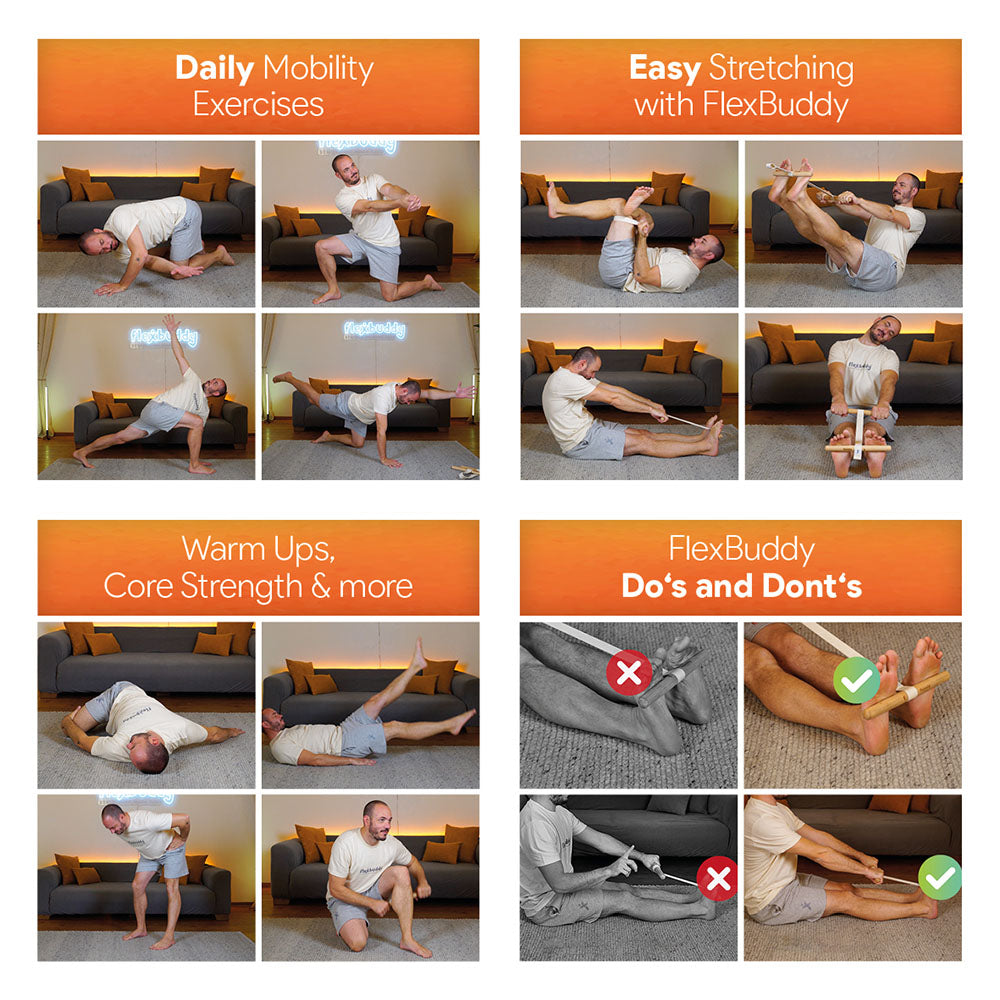
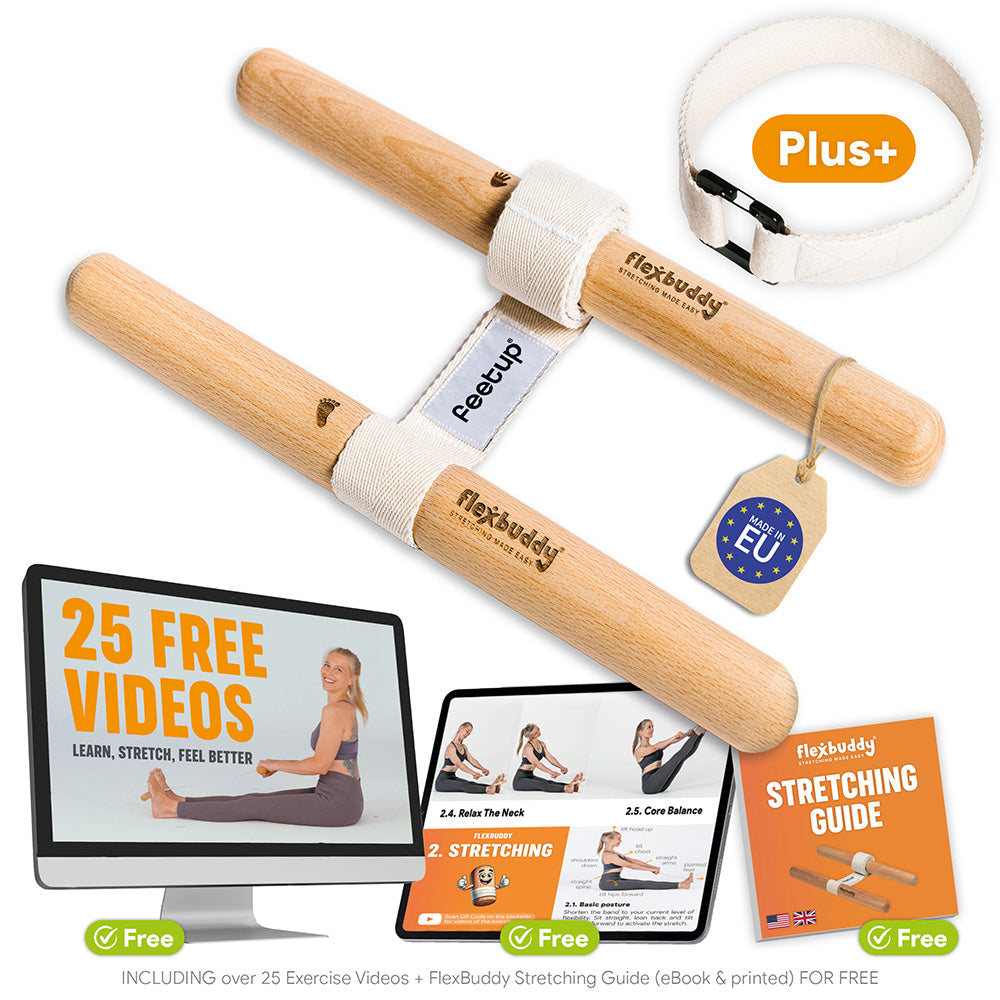
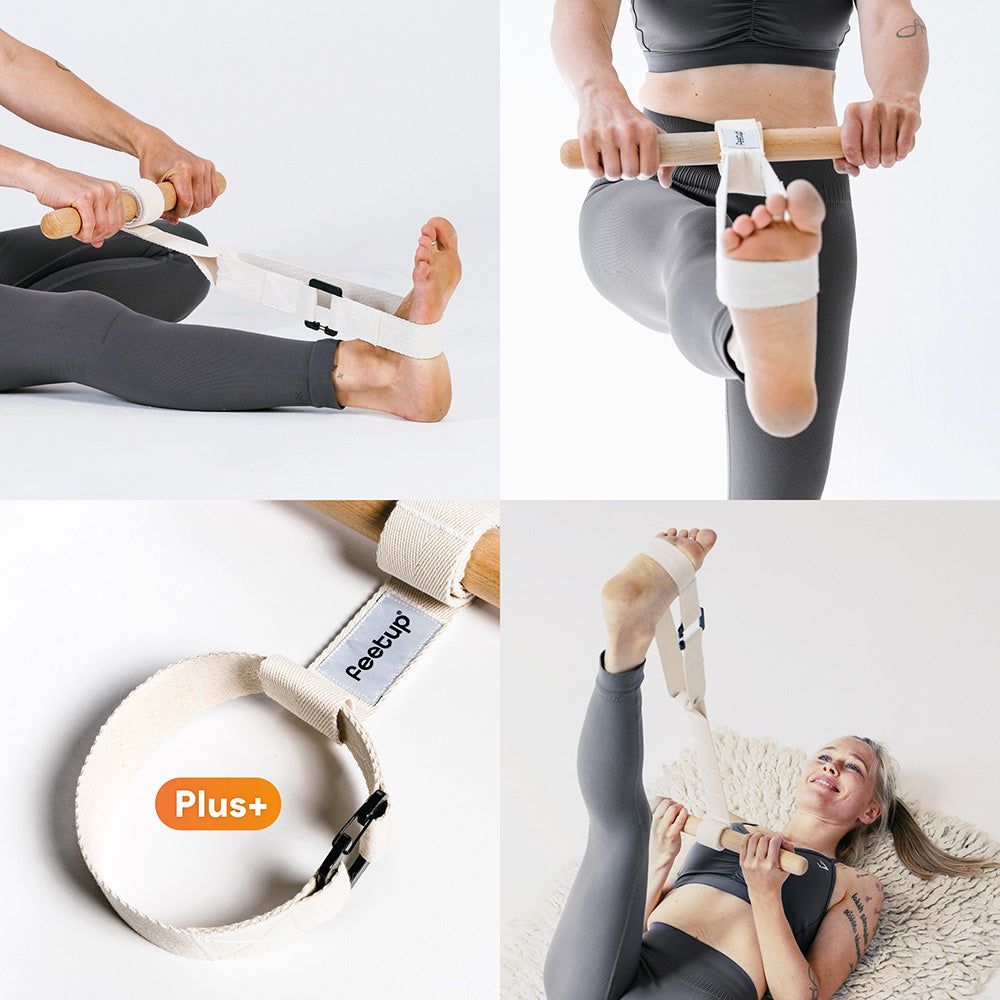
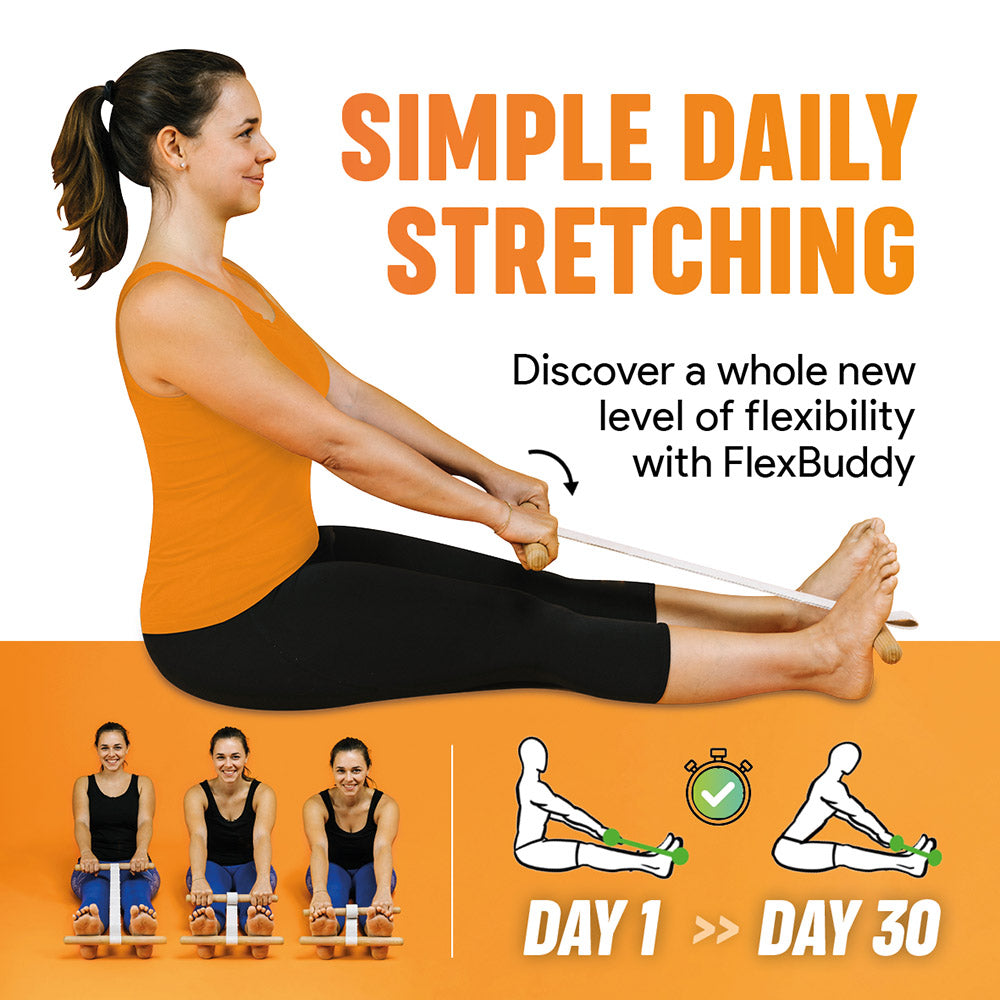
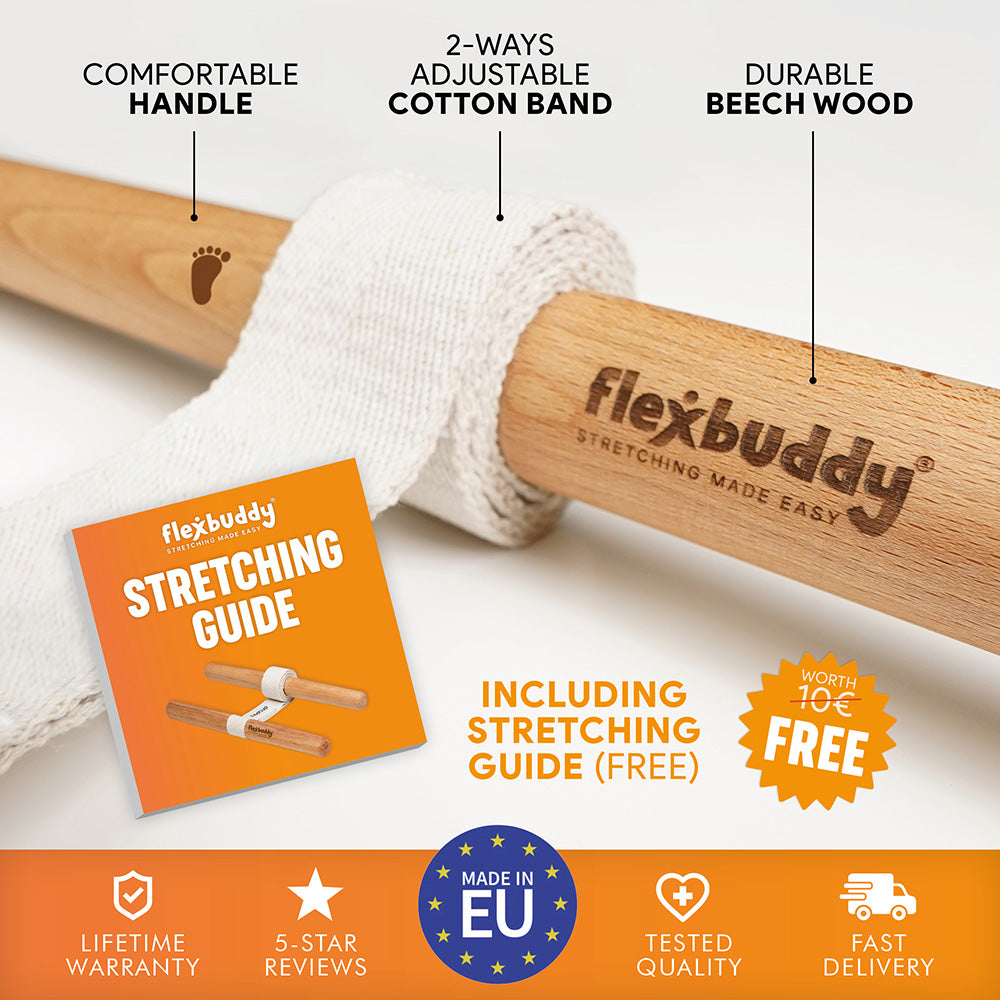
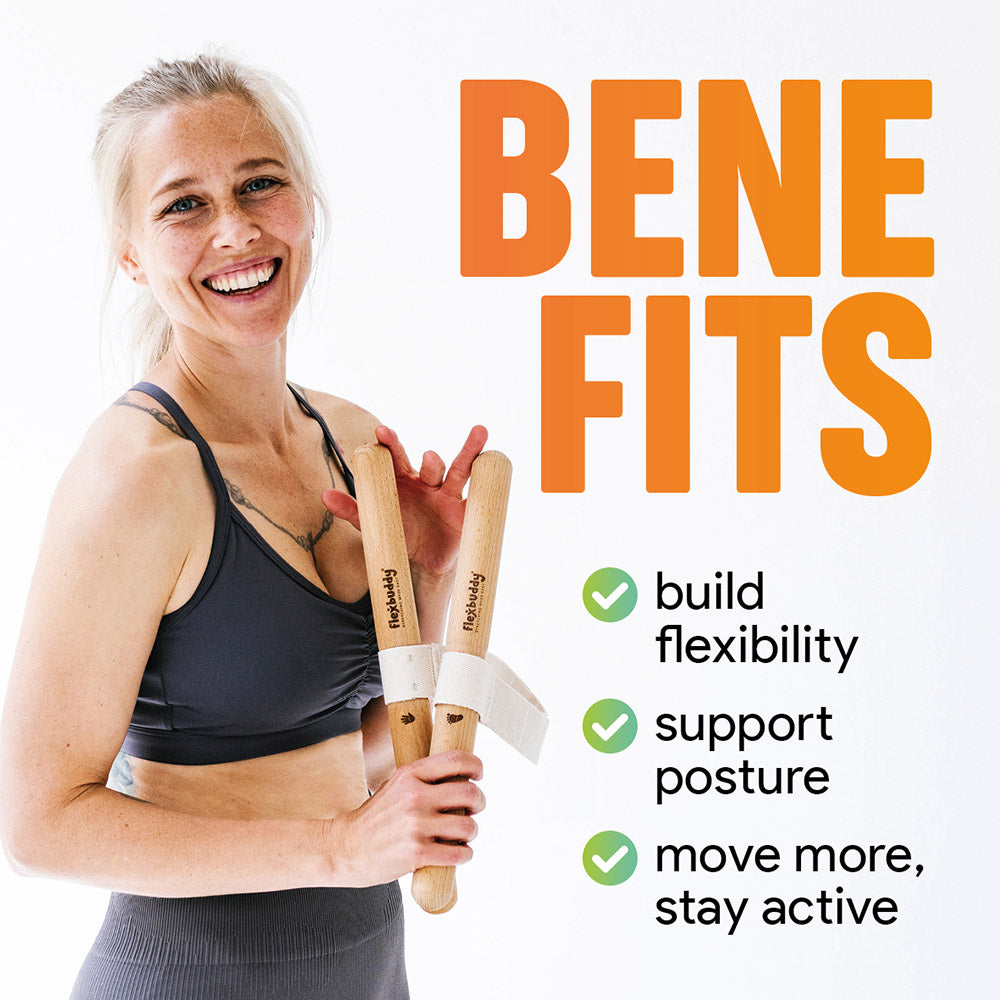
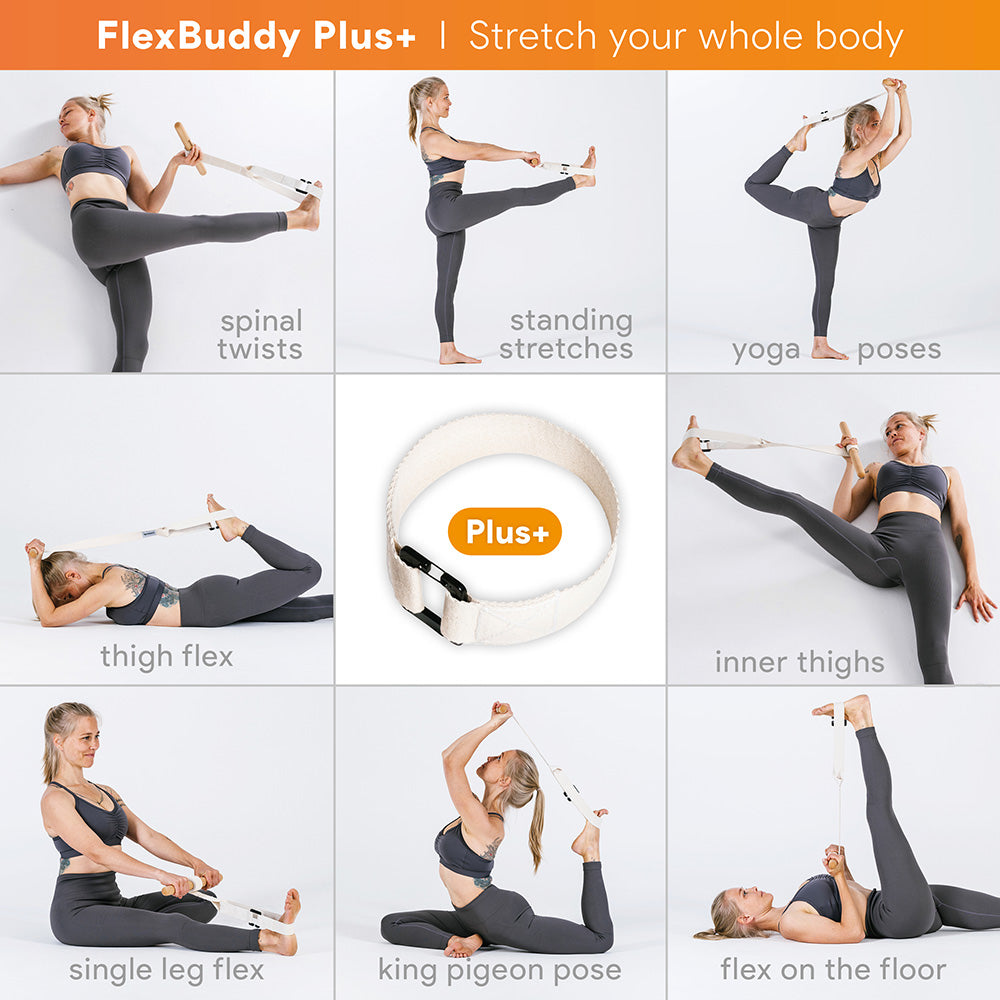
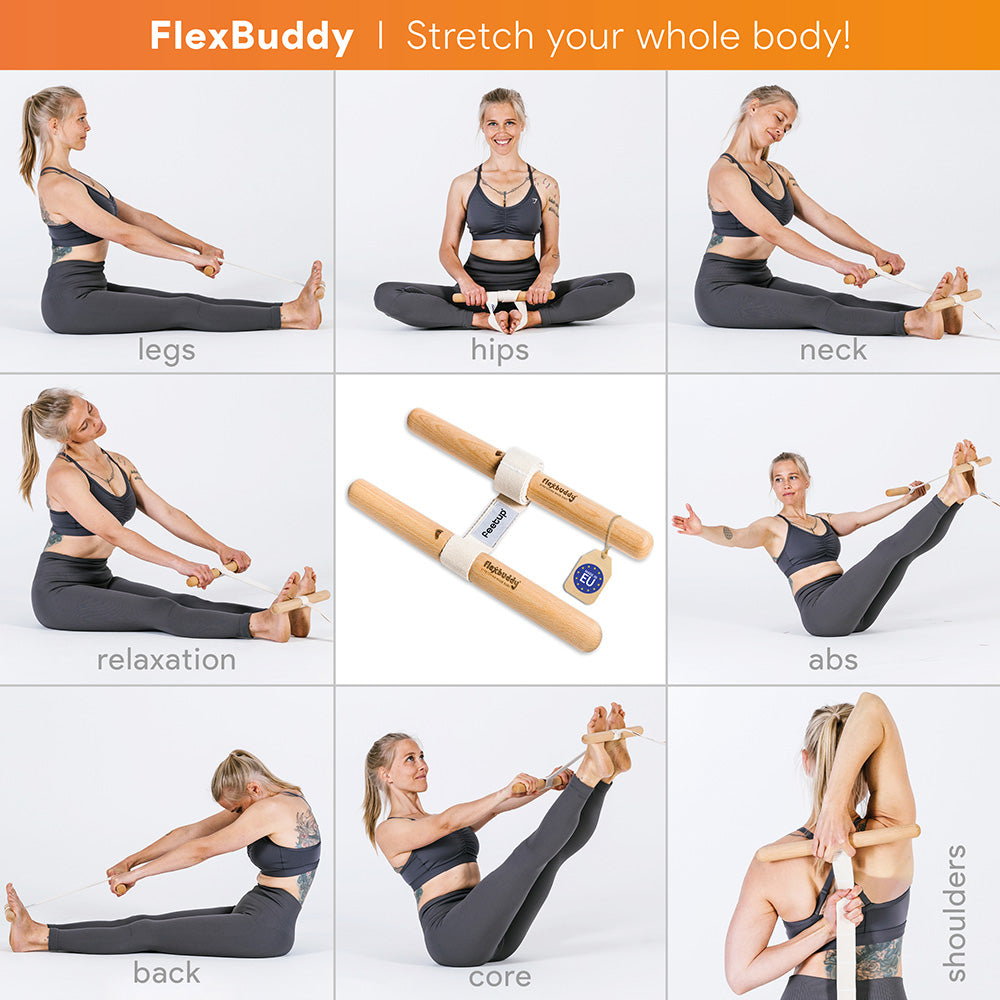
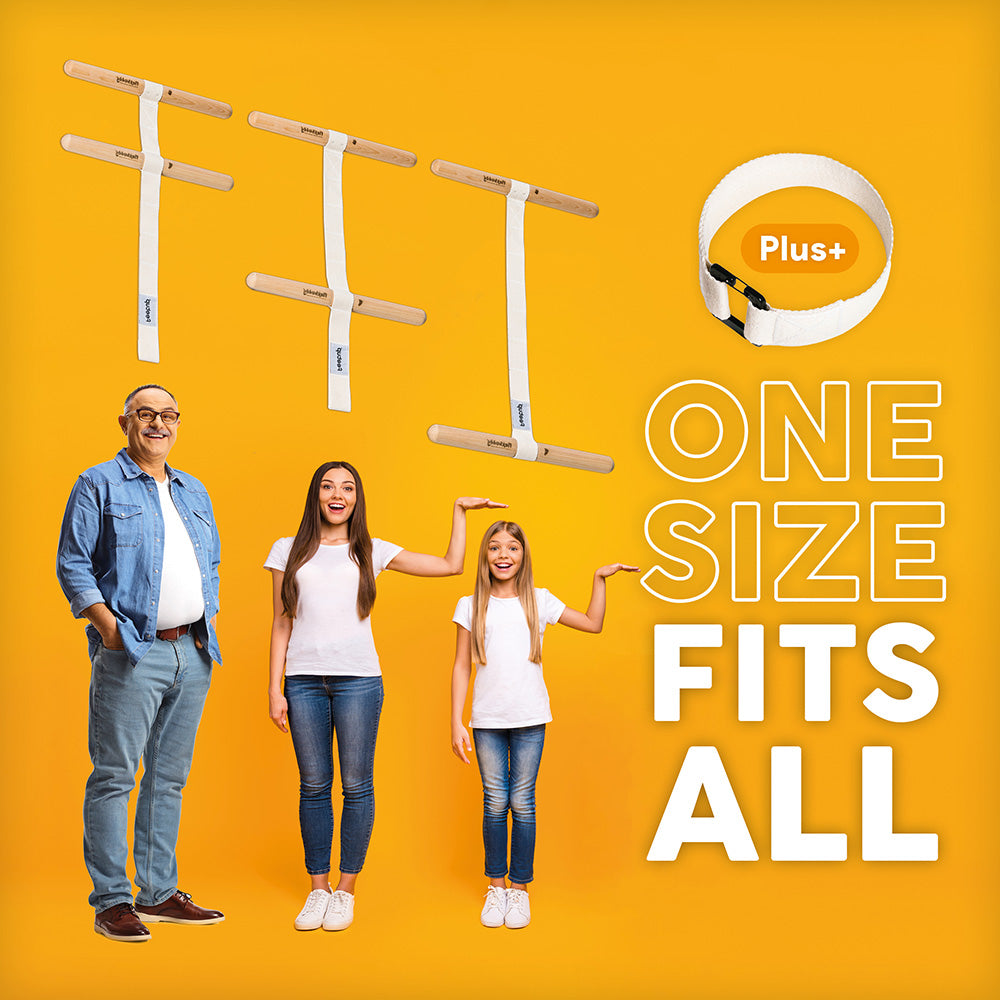
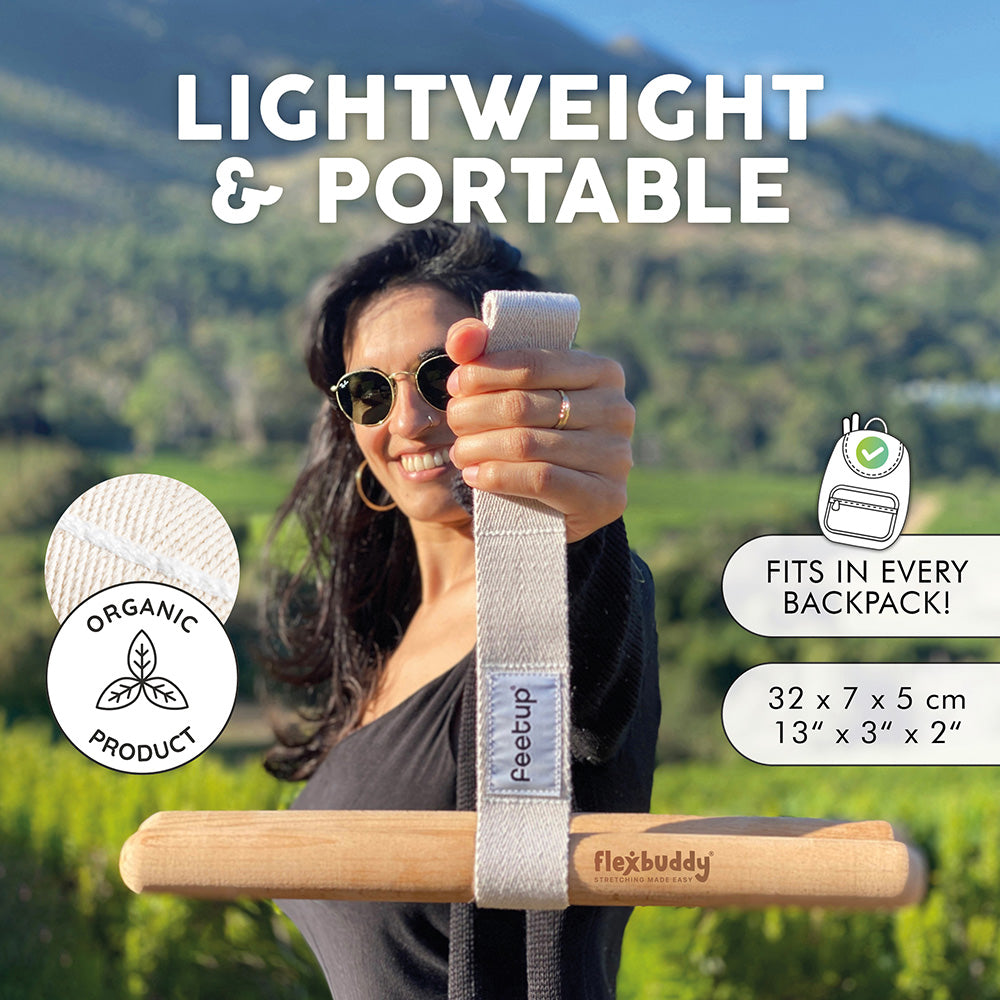
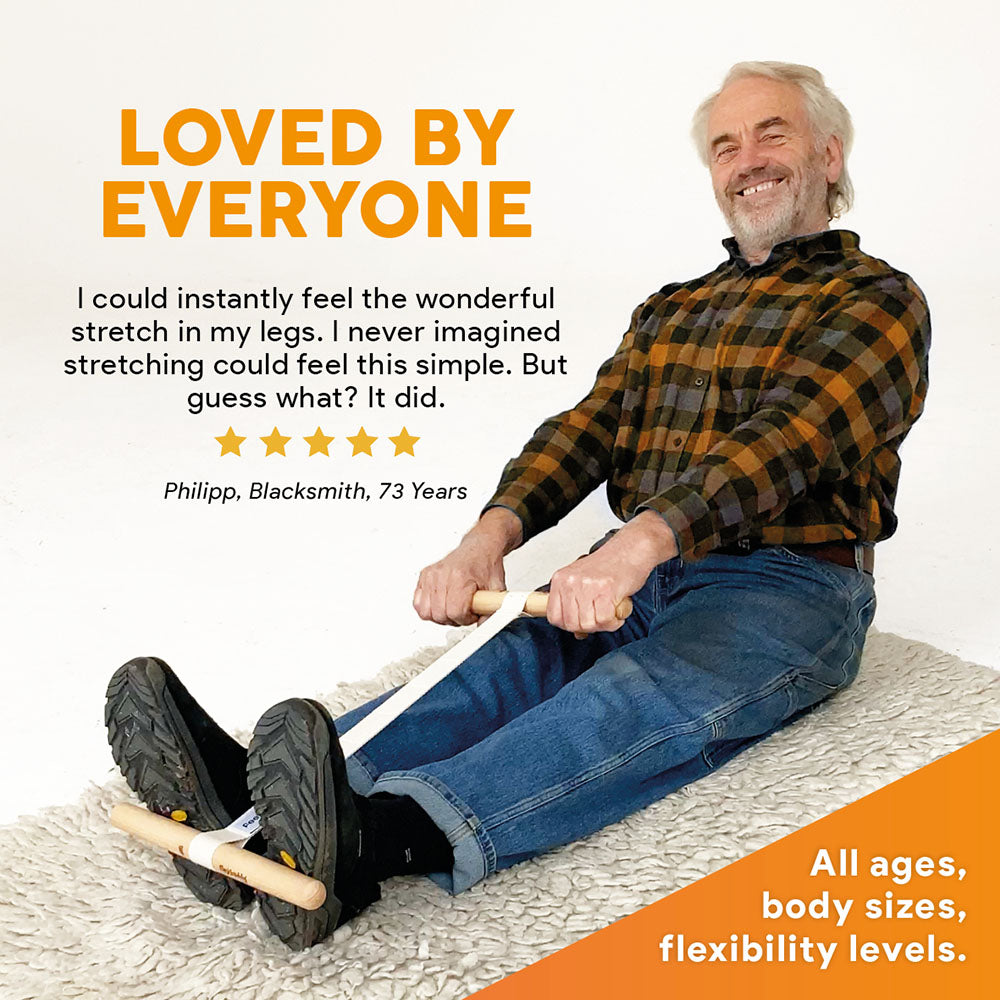
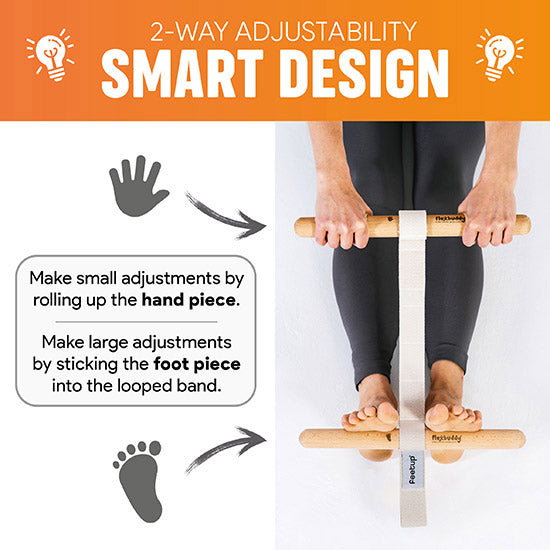
Seated calf stretches fail one way: you reach for the foot, the back rounds, and the pull lands in the lower back instead of the calf. FlexBuddy® is a stretching device made of two beech-wood bars joined by an adjustable cotton strap. The foot bar sits under the ball of the foot, keeping the strap centred on the forefoot; you hold the hand bar, sit tall, lean back and tilt the hips forward, so the spine stays long and the pull travels down the leg into the calf and the Achilles. Two-way adjustment (move the foot bar a loop, or roll the strap around the hand bar) shortens the stretch a notch as the ankle frees up, with no rope burn. Ten slow breaths, three times, knee straight then slightly bent, is about two minutes, and the foot bar doubles as a roller for the calf and the sole. "I use it before I go to bed and if I don't, I can really tell a difference in the morning. I think it's helping with plantar fasciitis too," wrote one Amazon reviewer. Lifetime warranty, 30-day money-back guarantee. See FlexBuddy, or take the quiz.
Frequently asked questions
What causes tight calves?
Usually load without length: running, walking and standing work the calves hard, while heeled shoes and sitting keep them short, and range drifts down with age [8]. Tightness without an exercise reason can be night cramps, linked by the NHS to ageing, pregnancy, dehydration and some medicines [15]; a swollen, throbbing, discoloured calf needs urgent medical attention as a possible clot [16].
Can tight calves cause knee pain?
They are a measurable risk. When ankle dorsiflexion is blocked, the knee bends less and drifts inwards during a squat, the pattern seen in patellofemoral pain [3], and basketball players with low ankle range were far more likely to develop patellar tendinopathy within a year [4].
Can tight calves cause plantar fasciitis?
Reduced ankle dorsiflexion was the strongest risk factor in a case-control study: people who could not dorsiflex past neutral had about 23 times the odds of plantar fasciitis compared with people with more than 10 degrees [2]. Whether the calf starts it or the pain stiffens the calf is not settled, but stretching the fascia and loading the calf both reduce the pain in trials [11][12].
How do you stretch tight calves in bed?
Lie on your back, loop a strap, towel or dressing-gown belt over the ball of the foot, keep the knee straight and pull the toes towards the shin for 20 to 30 seconds, then repeat with the knee slightly bent for the soleus; two to three holds each side [9]. For plantar fasciitis, add the fascia stretch before your first steps.
Should you stretch an Achilles tendon that hurts?
Gently, and only if the pain is in the middle of the tendon rather than at the heel bone. The treatment with the best evidence is progressive heel-raise loading [25][23]. For pain at the attachment, stretches and heel drops into deep dorsiflexion can make it worse, so work from floor level [13][14].
How long should I hold a calf stretch?
Ten to 30 seconds per hold for most adults, 30 to 60 seconds if you are older, repeated to about 60 seconds per muscle in total, on at least two to three days a week, daily if you can [9][10]. Do a straight-knee and a bent-knee version so both calf muscles get their minute.
This article is general information, not medical advice. Tight muscles usually respond well to regular stretching. If your pain is sharp, radiates down a leg, comes with numbness, weakness, fever, bladder or bowel changes, follows an injury, or keeps getting worse, see a doctor or physiotherapist before you stretch. A calf that is suddenly swollen, hot or discoloured, or a sudden snap at the back of the heel, needs medical attention the same day.
References
- Jones O. Muscles in the Posterior Compartment of the Leg. TeachMeAnatomy. https://teachmeanatomy.info/lower-limb/muscles/leg/posterior-compartment/ (accessed 4 Nov 2026).
- Riddle DL, Pulisic M, Pidcoe P, Johnson RE. Risk factors for plantar fasciitis: a matched case-control study. J Bone Joint Surg Am. 2003;85(5):872–877. doi:10.2106/00004623-200305000-00015. PMID 12728038.
- Macrum E, Bell DR, Boling M, Lewek M, Padua D. Effect of limiting ankle-dorsiflexion range of motion on lower extremity kinematics and muscle-activation patterns during a squat. J Sport Rehabil. 2012;21(2):144–150. doi:10.1123/jsr.21.2.144. PMID 22100617.
- Backman LJ, Danielson P. Low range of ankle dorsiflexion predisposes for patellar tendinopathy in junior elite basketball players: a 1-year prospective study. Am J Sports Med. 2011;39(12):2626–2633. doi:10.1177/0363546511420552. PMID 21917610.
- Konor MM, Morton S, Eckerson JM, Grindstaff TL. Reliability of three measures of ankle dorsiflexion range of motion. Int J Sports Phys Ther. 2012;7(3):279–287. PMID 22666642; PMC3362988.
- Powden CJ, Hoch JM, Hoch MC. Reliability and minimal detectable change of the weight-bearing lunge test: a systematic review. Man Ther. 2015;20(4):524–532. doi:10.1016/j.math.2015.01.004. PMID 25704110.
- Radford JA, Burns J, Buchbinder R, Landorf KB, Cook C. Does stretching increase ankle dorsiflexion range of motion? A systematic review. Br J Sports Med. 2006;40(10):870–875. doi:10.1136/bjsm.2006.029348. PMID 16926259; PMC2465055.
- Johnson E, Bradley B, Witkowski K, et al. Effect of a static calf muscle-tendon unit stretching program on ankle dorsiflexion range of motion of older women. J Geriatr Phys Ther. 2007;30(2):49–52. doi:10.1519/00139143-200708000-00003. PMID 18171487.
- Garber CE, Blissmer B, Deschenes MR, et al.; American College of Sports Medicine. Position stand: quantity and quality of exercise for developing and maintaining cardiorespiratory, musculoskeletal, and neuromotor fitness in apparently healthy adults. Med Sci Sports Exerc. 2011;43(7):1334–1359. doi:10.1249/MSS.0b013e318213fefb
- Harvard Health Publishing. The ideal stretching routine. Harvard Medical School, 16 Mar 2026 (reviewed by H. E. LeWine, MD). https://www.health.harvard.edu/staying-healthy/the-ideal-stretching-routine (accessed 4 Nov 2026).
- DiGiovanni BF, Nawoczenski DA, Lintal ME, et al. Tissue-specific plantar fascia-stretching exercise enhances outcomes in patients with chronic heel pain. A prospective, randomized study. J Bone Joint Surg Am. 2003;85(7):1270–1277. doi:10.2106/00004623-200307000-00013. PMID 12851352.
- Rathleff MS, Mølgaard CM, Fredberg U, et al. High-load strength training improves outcome in patients with plantar fasciitis: a randomized controlled trial with 12-month follow-up. Scand J Med Sci Sports. 2015;25(3):e292–e300. doi:10.1111/sms.12313. PMID 25145882.
- Jonsson P, Alfredson H, Sunding K, Fahlström M, Cook J. New regimen for eccentric calf-muscle training in patients with chronic insertional Achilles tendinopathy: results of a pilot study. Br J Sports Med. 2008;42(9):746–749. doi:10.1136/bjsm.2007.039545. PMID 18184750.
- American Academy of Orthopaedic Surgeons (OrthoInfo). Achilles Tendinitis. Contributor D. M. Walton, MD; peer reviewer M. K. Mulcahey, MD. https://www.orthoinfo.org/en/diseases--conditions/achilles-tendinitis/ (accessed 4 Nov 2026).
- NHS. Leg cramps. Last reviewed 1 Dec 2023. https://www.nhs.uk/conditions/leg-cramps/ (accessed 4 Nov 2026).
- NHS. DVT (deep vein thrombosis). Last reviewed 30 Apr 2026. https://www.nhs.uk/conditions/deep-vein-thrombosis-dvt/ (accessed 4 Nov 2026).
- Cleveland Clinic. Plantar Fasciitis. Medically reviewed, last updated 4 Nov 2022. https://my.clevelandclinic.org/health/diseases/14709-plantar-fasciitis (accessed 4 Nov 2026).
- NHS. Plantar fasciitis. Last reviewed 14 Feb 2025. https://www.nhs.uk/conditions/plantar-fasciitis/ (accessed 4 Nov 2026).
- Irving DB, Cook JL, Menz HB. Factors associated with chronic plantar heel pain: a systematic review. J Sci Med Sport. 2006;9(1-2):11–22. doi:10.1016/j.jsams.2006.02.004. PMID 16584917.
- Hamstra-Wright KL, Huxel Bliven KC, Bay RC, Aydemir B. Risk factors for plantar fasciitis in physically active individuals: a systematic review and meta-analysis. Sports Health. 2021;13(3):296–303. doi:10.1177/1941738120970976. PMID 33530860; PMC8083151.
- Dill KE, Begalle RL, Frank BS, Zinder SM, Padua DA. Altered knee and ankle kinematics during squatting in those with limited weight-bearing-lunge ankle-dorsiflexion range of motion. J Athl Train. 2014;49(6):723–732. doi:10.4085/1062-6050-49.3.29. PMID 25144599; PMC4264643.
- DiGiovanni BF, Nawoczenski DA, Malay DP, et al. Plantar fascia-specific stretching exercise improves outcomes in patients with chronic plantar fasciitis. A prospective clinical trial with two-year follow-up. J Bone Joint Surg Am. 2006;88(8):1775–1781. doi:10.2106/JBJS.E.01281. PMID 16882901.
- Silbernagel KG, Brorsson A, Lundberg M. The majority of patients with Achilles tendinopathy recover fully when treated with exercise alone: a 5-year follow-up. Am J Sports Med. 2011;39(3):607–613. doi:10.1177/0363546510384789. PMID 21084657.
- Malliaras P, Barton CJ, Reeves ND, Langberg H. Achilles and patellar tendinopathy loading programmes: a systematic review comparing clinical outcomes and identifying potential mechanisms for effectiveness. Sports Med. 2013;43(4):267–286. doi:10.1007/s40279-013-0019-z. PMID 23494258.
- Alfredson H, Pietilä T, Jonsson P, Lorentzon R. Heavy-load eccentric calf muscle training for the treatment of chronic Achilles tendinosis. Am J Sports Med. 1998;26(3):360–366. doi:10.1177/03635465980260030301. PMID 9617396.
- Silbernagel KG, Thomeé R, Eriksson BI, Karlsson J. Continued sports activity, using a pain-monitoring model, during rehabilitation in patients with Achilles tendinopathy: a randomized controlled study. Am J Sports Med. 2007;35(6):897–906. doi:10.1177/0363546506298279. PMID 17307888.
- Cook JL, Purdam C. Is compressive load a factor in the development of tendinopathy? Br J Sports Med. 2012;46(3):163–168. doi:10.1136/bjsports-2011-090414. PMID 22113234.
- Wilke J, Müller AL, Giesche F, Power G, Ahmedi H, Behm DG. Acute effects of foam rolling on range of motion in healthy adults: a systematic review with multilevel meta-analysis. Sports Med. 2020;50(2):387–402. doi:10.1007/s40279-019-01205-7. PMID 31628662.